Explained for Kids
Imagine your skull, the bone around your head, is like a puzzle made of different pieces. As you grow, these pieces slowly come together and fit perfectly. But sometimes, one or more pieces of the puzzle start to close too early, like when you try to put together a puzzle before all the pieces are there. That’s what happens with craniosynostosis. It means some of the puzzle pieces of your skull close too soon. When this happens, it can make your head shape look different. Sometimes, it might even make it hard for your brain to grow as it should.
But you know what? Doctors can help! They can do special surgeries to open up those puzzle pieces and help your head grow the right way. With a little bit of help from doctors and lots of love from your family, your head can grow just fine, and you can do all the things you love!
Explained for Parents
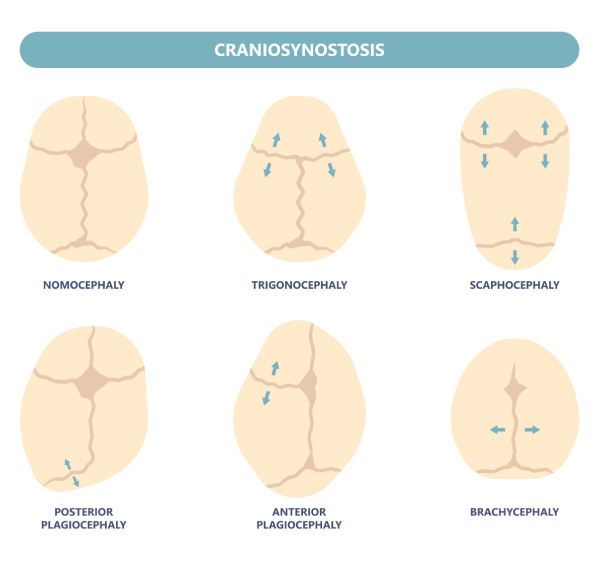
Craniosynostosis happens when the “joints” in a baby’s skull, called sutures, close too early. These sutures normally stay open as the baby grows, allowing the skull to expand as the brain grows. But when one or more of these sutures close prematurely, it can cause the baby’s head to develop an unusual shape. There are different types of craniosynostosis depending on which sutures are affected. For example, if the suture at the top of the head closes too early (sagittal synostosis), it can result in a long, narrow head shape. If the sutures on the sides of the head close early (coronal synostosis), it can lead to a flattened forehead and an asymmetric head shape.
While craniosynostosis itself isn’t usually painful, it can cause issues with appearance and sometimes with brain development if it’s not treated. That’s why treatment often involves surgery to release the affected sutures and reshape the skull. This surgery is usually done when the baby is a few months old, and it helps the skull grow properly and improves the shape of the head. With early diagnosis and treatment, most children with craniosynostosis can go on to develop normally and have a healthy, well-shaped head. Ongoing monitoring may be needed to ensure that the skull continues to grow and develop properly after surgery.